Choose Which Site You Want To See


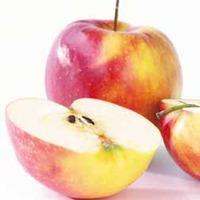
Apple \'braeburn\' - 1 Bare Root Apple Tree: Braeburn is a first class dessert apple - crisp without being hard, and very juicy. This variety can be harvested in October and stores very well. Braeburn is not self-pollinating so for the heaviest crops it is best grown with Cox's Orange Pippin. Height: 3m (9') Rootstock: M9/ M26. Supplied as root-wrapped 1m high pruned tree. Culinary information: Some parts of these flowers are edible. Click here for more details about edible flowers. Useful links:How to plan
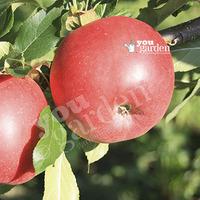
Patio Apple Sun Red Bare Root Ree: Have you ever wanted to pick fresh apples form your garden, but simply don\'t have the space. Now new Apple \'Sun Red\' (R) may well be ther answer. \r Developed from extensive hybridisation by the clever breeders at Zaiger, the US-based leading fruit tree breeder, especially to meet the needs of gardeners short of space. The result is a gorgeous deep red skinned, juicy early apple, perfect to pick off the tree in even the smallest of gardens. Best grown in large pots, so you can move your tree in...
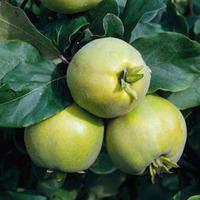
Quince \'vranja\' (patio) - 1 Bare Root Quince Tree: This attractive tree has beautiful rounded silver leaves and pretty green-pink flowers in spring. followed by large, fragrant, pear shaped fruits that ripen to a lovely shade of yellow. The fruits can be harvested from October. Freshly picked quinces are bitter and inedible, but soften when cooked to make excellent jams and jellies, and can be added to apple pies before cooking to enhance the flavour. Self-fertile Quince 'Vranja' is propagated onto 'Quince A' rootstock. He

Crab Apple (hedging) - 1000 Bare Root Hedging Plants: A British native, Crab Apple trees are naturally small and make an ideal hedging plant. In late spring a profusion of white-pink blossoms smother the plant, which are fantastic for bees. These are followed by small yellow-green crab apples which become flushed red and often remain on the tree well after leaf fall. The leaves also take on fiery autumn shades of yellow, orange and red for spectacular late season colour. With high wildlife value, Malus sylvestris is ideal grown as part of...

Crab Apple (hedging) - 500 Bare Root Hedging Plants: A British native, Crab Apple trees are naturally small and make an ideal hedging plant. In late spring a profusion of white-pink blossoms smother the plant, which are fantastic for bees. These are followed by small yellow-green crab apples which become flushed red and often remain on the tree well after leaf fall. The leaves also take on fiery autumn shades of yellow, orange and red for spectacular late season colour. With high wildlife value, Malus sylvestris is ideal grown as part of...

Crab Apple (hedging) - 250 Bare Root Hedging Plants: A British native, Crab Apple trees are naturally small and make an ideal hedging plant. In late spring a profusion of white-pink blossoms smother the plant, which are fantastic for bees. These are followed by small yellow-green crab apples which become flushed red and often remain on the tree well after leaf fall. The leaves also take on fiery autumn shades of yellow, orange and red for spectacular late season colour. With high wildlife value, Malus sylvestris is ideal grown as part of...

Crab Apple (hedging) - 100 Bare Root Hedging Plants: A British native, Crab Apple trees are naturally small and make an ideal hedging plant. In late spring a profusion of white-pink blossoms smother the plant, which are fantastic for bees. These are followed by small yellow-green crab apples which become flushed red and often remain on the tree well after leaf fall. The leaves also take on fiery autumn shades of yellow, orange and red for spectacular late season colour. With high wildlife value, Malus sylvestris is ideal grown as part of...

Crab Apple (hedging) - 50 Bare Root Hedging Plants: A British native, Crab Apple trees are naturally small and make an ideal hedging plant. In late spring a profusion of white-pink blossoms smother the plant, which are fantastic for bees. These are followed by small yellow-green crab apples which become flushed red and often remain on the tree well after leaf fall. The leaves also take on fiery autumn shades of yellow, orange and red for spectacular late season colour. With high wildlife value, Malus sylvestris is ideal grown as part of...

Crab Apple (hedging) - 1 Bare Root Hedging Plant: A British native, Crab Apple trees are naturally small and make an ideal hedging plant. In late spring a profusion of white-pink blossoms smother the plant, which are fantastic for bees. These are followed by small yellow-green crab apples which become flushed red and often remain on the tree well after leaf fall. The leaves also take on fiery autumn shades of yellow, orange and red for spectacular late season colour. With high wildlife value, Malus sylvestris is ideal grown as part of...
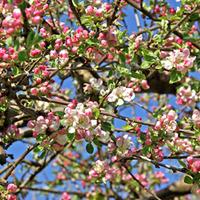
Crab Apple (hedging) - 10 Bare Root Hedging Plants: A British native, Crab Apple trees are naturally small and make an ideal hedging plant. In late spring a profusion of white-pink blossoms smother the plant, which are fantastic for bees. These are followed by small yellow-green crab apples which become flushed red and often remain on the tree well after leaf fall. The leaves also take on fiery autumn shades of yellow, orange and red for spectacular late season colour. With high wildlife value, Malus sylvestris is ideal grown as part of...
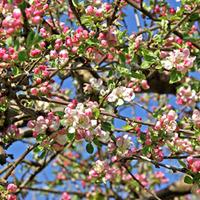
Crab Apple (hedging) - 25 Bare Root Hedging Plants: A British native, Crab Apple trees are naturally small and make an ideal hedging plant. In late spring a profusion of white-pink blossoms smother the plant, which are fantastic for bees. These are followed by small yellow-green crab apples which become flushed red and often remain on the tree well after leaf fall. The leaves also take on fiery autumn shades of yellow, orange and red for spectacular late season colour. With high wildlife value, Malus sylvestris is ideal grown as part of...
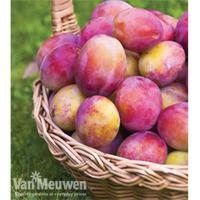
Plum \'victoria\' - 1 Bare Root Plum Tree: A classic, self fertile variety of plum producing heavy crops of delicious fruit in August and September. Victoria plums are delicious eaten straight from the tree, but also are excellent for freezing, jam-making and desserts. 1.2m high root wrap tree supplied that should produce a few fruit within 2 years and start cropping in just 3 years. Height when mature: 3m (9'). Rootstock: St Julien or Ferlinan. Useful links:How to plant trees and shrubs

Fraser Fir Tree - 1 Bare Root Fir Tree: A slow growing fir tree that does not lose it?s needles over time and also has the added bonus of a fantastic pine frangrance too. Abies fraseri, also known as the Fraser fir, maintains a dense habit with a typical conical shape you?d expect from this type of tree. The young cones of this evergreen tree appear with a hint of purple when they first show, adding a touvh of additional interest to any garden. Height: 15m (49ft). Spread: 5m (16ft)
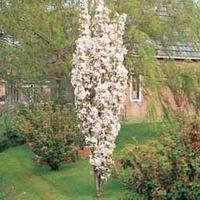
Cherry \'amanogawa\' - 1 Bare Root Cherry Tree: This upright flowering cherry tree has a neat, columnar habit giving rise to the common name 'Flagpole Cherry Tree'. In late spring, this RHS AGM variety becomes smothered in delightful white-pink blossom, which has a delicate scent and is highly attractive to bees. Come autumn, the foliage takes on fiery tones of yellow, orange and red for an extended season of interest. Perfect grown as a focal point in the garden, Prunus 'Amanogawa' is low-maintenance and a superb tree
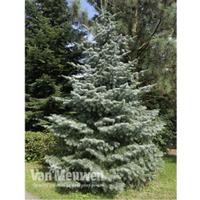
Concolor Fir Tree - 1 Bare Root Fir Tree: An extremely hardy, yet beautiful fir tree, the concolor fir, is also known as the White Fir and is renowned for its beautiful blue-green foliage that makes it stand out from other firs. Abies concolor also bears cylindrical, yellow/green cones, which mature to the natural brown colour. The neat and regular conical shape also makes it an ideal Christmas tree too! Height: 18m (59ft). Spread: 5m (16ft).
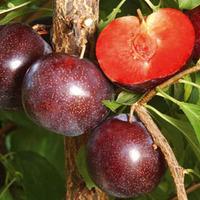
Pluot \'purple Candy\' - 1 Bare Root Pluot Tree: This amazing hybrid fruit tree combines the juiciness of a plum with the fragrant taste of an apricot The large, smooth, red skinned fruits can be harvested from August. Pluot 'Purple Candy' is a self-fertile, naturally small tree grafted onto a semi-dwarfing rootstock, giving a compact, productive tree. Height and spread: 2.5m (8'). Rootstock: Peach Seedling. Estimated time to cropping once planted: 2 years. Estimated time to best yields: 4 years.
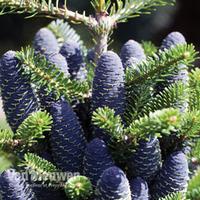
Nordman Fir Tree - 1 Bare Root Fir Tree: Most commonly known as the favourite fir tree to use as a Christmas tree, Abies nordmanniana, or the Nordmann Fir, is and evergreen conifer which can grown in excess of 30m if left. New growth starts out an attractive light green before it matures to match the rest of the rich dark green needles. The young cones start of green and fade through a reddish brown to become the traditional colour. Height: 30m (98ft). Spread: 8m (26ft).
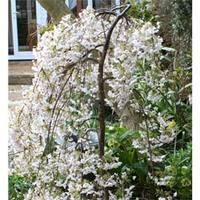
Cherry \'iford Flowering\' - 1 X 1.2m Bare Root Cherry Tree: At the turn of the 19th century Harold Peto, architect and garden designer, found a small and completely pendulous pale shell pink flowering cherry on one of his plant collecting trips to the East. He named it the Iford Cherry and it was planted on the Iford terraces and trailed down the terrace banks and along the paths creating a truly magnificent sight by all accounts of the time. In 1999 the present owners of Iford Manor decided to propagate from the only surviving tree which by then had...
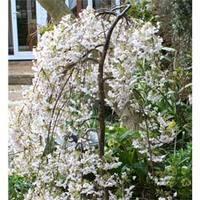
Cherry \'iford Flowering\' - 2 X 1.2m Bare Root Cherry Tree: At the turn of the 19th century Harold Peto, architect and garden designer, found a small and completely pendulous pale shell pink flowering cherry on one of his plant collecting trips to the East. He named it the Iford Cherry and it was planted on the Iford terraces and trailed down the terrace banks and along the paths creating a truly magnificent sight by all accounts of the time. In 1999 the present owners of Iford Manor decided to propagate from the only surviving tree which by then had...
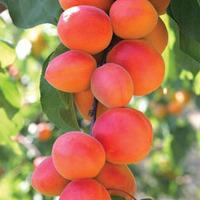
Apricot \'flavourcot\' - 1 Bare Root Apricot Tree: Apricot 'Flavourcot'® has been specially bred for the cooler UK climate, producing big crops of large, egg-sized, delicious orange-red fruits. You will always get a crop, as it is late flowering and is also frost resistant. As well as being sweet and juicy when eaten fresh, This variety is also ideal for cooking, Apricot 'Flavourcot'® is self-fertile and has been propagated onto 'Montclare' rootstock for a small, manageable tree with a bigger cr